Why Sealcoating Costs What It Does
Alright, let's talk about sealcoating your asphalt. You're probably wondering what it's gonna set you back, and frankly, that's a smart question. It's not just a flat fee, you know? A few things really push the price up or down, and understanding them helps you get a fair shake.
First off, size matters. A lot. A small residential driveway, say 500 square feet, is a whole different ballgame than a big commercial parking lot that's 10,000 square feet. The bigger the area, the more material, the more labor, and sometimes, the more equipment we need. Simple math, right?
Then there's the condition of your existing asphalt. If your driveway looks like a spiderweb with cracks everywhere, or you've got potholes big enough to swallow a small car, that's going to add to the cost. We can't just slap sealcoat over a mess like that; we've got to clean it, repair those cracks, and fill those holes first. That prep work is crucial for the sealcoat to actually do its job and last. If you skip it, you're just throwing money away.
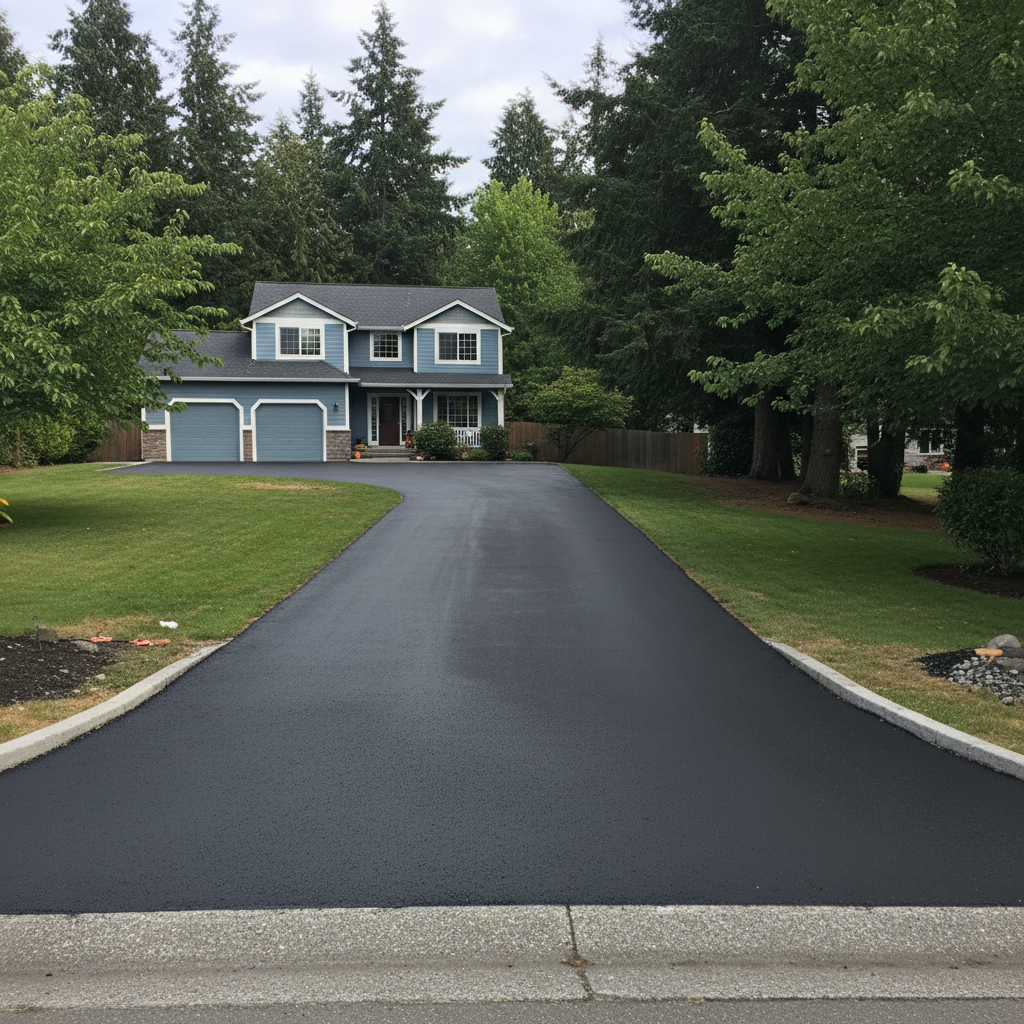
Access is another one. Is your driveway easy to get to? Can we pull our truck and equipment right up to it? Or is it a long, winding path through a bunch of trees where we have to hand-apply a lot of the material? The more difficult it is to work efficiently, the more time it takes, and time is money.
Lastly, the type of sealcoat makes a difference. There are different grades and formulations. Some are designed for heavy traffic, some for residential, some dry faster. We use good quality stuff here at Coastal Asphalt Solutions because I believe in doing the job right the first time, but some contractors might offer cheaper options that just won't hold up as long.
Typical Price Ranges You'll See in Arlington
Okay, so you want numbers. I get it. For a standard residential driveway in Arlington, let's say it's around 500 to 1,000 square feet – that's pretty common for a lot of the homes around the Bryant neighborhood or out towards Getchell. You're generally looking at anywhere from $350 to $700. That's for a basic sealcoat application, assuming the driveway isn't a total disaster and just needs standard cleaning and a few minor crack fills.
Now, if your driveway is larger, maybe 1,500 to 2,500 square feet, the price jumps. You might be in the $600 to $1,200 range. Again, this is for a relatively well-maintained surface. If we're talking about a significant amount of crack filling or patching, you could add another $100-$300, sometimes more depending on the extent of the damage. For a small business parking lot, say 5,000 square feet, you could be looking at $1,500 to $3,000, and commercial lots over 10,000 square feet can easily run $3,000 and up. These are just estimates, of course, but it gives you a ballpark.
What a Good Quote Should Include
When you get a quote from me or any other reputable contractor, it shouldn't just be a single number. You want to see a breakdown. Here's what you should expect:
- Square footage: This tells you exactly what area they're covering.
- Prep work details: What kind of cleaning will they do? Will they blow off debris, power wash, or both? How will they address weeds or grass growing in cracks?
- Crack filling: It should specify if crack filling is included, what type of material they'll use, and how many linear feet are estimated.
- Number of coats: Most residential driveways benefit from two coats for durability. Make sure it's clear.
- Type of sealcoat material: Ask what brand and type they're using.
- Edging and protection: How will they protect your garage door, landscaping, and concrete sidewalks from overspray?
- Cure time: They should advise you on how long to stay off the surface.
- Warranty: What kind of guarantee do they offer on their work?
If a quote just says