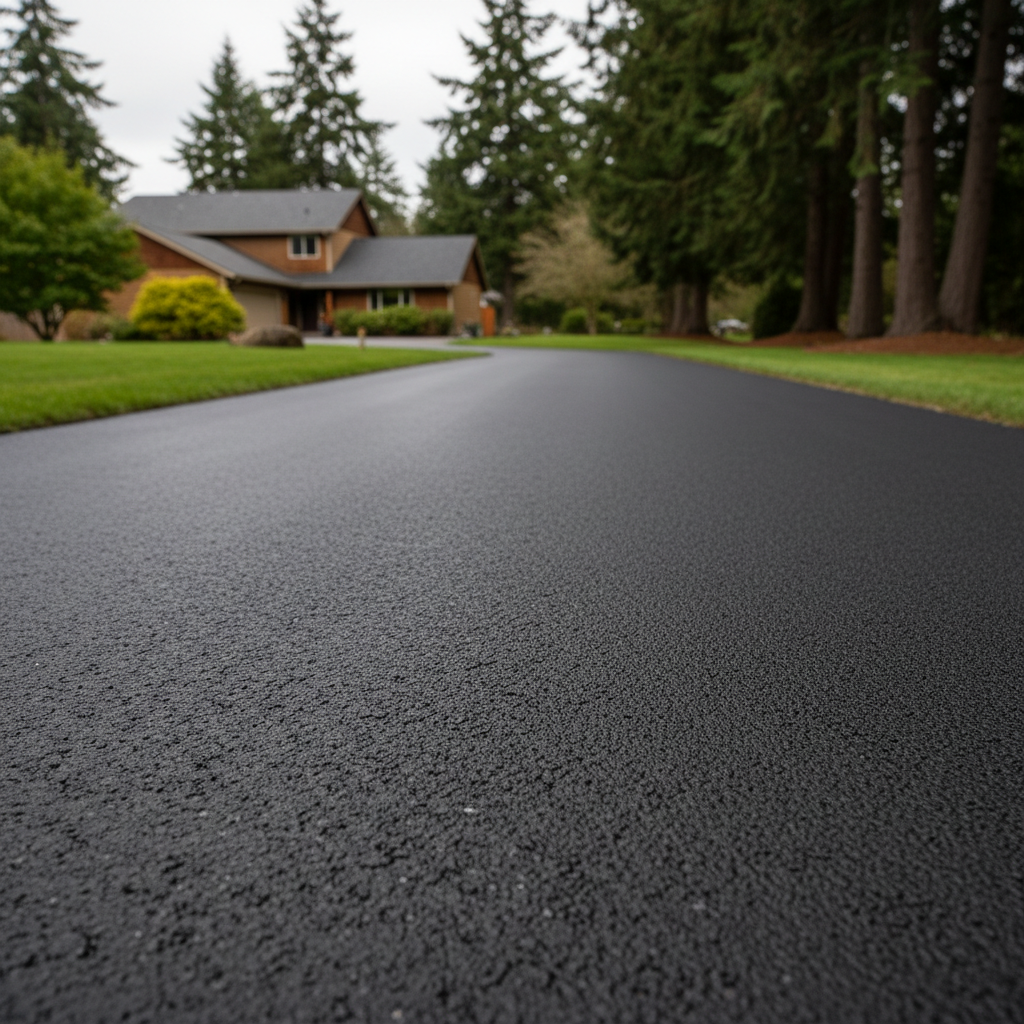
So, you're probably wondering, what's the big deal with 'commercial' asphalt if I'm just a homeowner? That's a fair question, and honestly, I get asked it a lot around Arlington. When folks hear "commercial," they usually picture huge parking lots or busy roads, not their own residential driveway. But the truth is, those lines can get pretty blurry. Understanding the differences now could save you a real headache – and some money – down the road.
I've been laying asphalt for a long time, and I've seen all sorts of projects. From small driveways in the High Clover Park neighborhood to those big commercial lots, you name it. Homeowners often ask me about commercial asphalt, so I've put together some of their most common questions, along with my honest answers.
What exactly is "commercial asphalt"? Is it different from residential?
Yeah, it's generally different, but maybe not in the way you'd expect. It's not like it's a completely different material, you know? The asphalt itself – that mix of aggregate and binder – is pretty much the same stuff. The big difference really comes down to the specifications, how thick it is, and how it's engineered. We design commercial projects to handle heavier loads, way more frequent traffic, and usually larger areas. This means we're talking about thicker layers, a much stronger base, and sometimes even different aggregate sizes in the mix. All that helps it stand up to constant abuse from trucks, buses, and hundreds of cars every day. For a residential driveway, though, you're usually looking at lighter traffic, so the specs can be a bit less demanding.
Why would a homeowner even consider commercial-grade asphalt?
Most homeowners won't need full-blown commercial specs for their driveway, let's be clear. But there are definitely times when it makes a lot of sense to go beyond standard residential. Think about it: Do you own an RV? Maybe you've got heavy equipment stored on your property? Or perhaps you run a home business with regular deliveries from big trucks? What if you've got a long, winding driveway that sees a ton of traffic from family and visitors? If you're really putting a lot of stress on your pavement, or if you've got that soft, clay-heavy soil we often find around the Stillaguamish River basin, then a more robust, commercial-grade base and thicker asphalt layers can give you significantly more durability. It'll last longer, too. It's an investment, sure, but it can absolutely pay off by helping you avoid costly repairs later on.
Does commercial asphalt cost more? How much more are we talking?
Absolutely, it costs more. You're paying for more material, after all – thicker layers of asphalt and usually a more substantial base. You're also paying for the engineering that goes into designing a stronger pavement structure. The equipment we use might be heavier, and the labor involved in preparing a deeper, stronger base can definitely add to the cost. It's tough to give exact numbers without seeing the project, but you could easily be looking at a 20-50% increase over a standard residential driveway, depending on the specifics. It's not just about the asphalt itself; it's the whole system underneath it.
How long does commercial asphalt last compared to residential?
If it's installed correctly and you keep up with the maintenance, commercial-grade asphalt can last significantly longer. A well-built residential driveway might give you 15-20 years with regular sealcoating. But a commercial-spec pavement, designed for those heavier loads and more traffic, could easily push 20-30 years or even more before needing major rehabilitation. Again, that's assuming good maintenance. The key is that 'designed for heavier loads' part. It's built to take a beating, so when it's just handling residential traffic, it's got a much larger safety factor built right in.
Are there any downsides to using commercial asphalt for my home?
Besides the higher initial cost, the main 'downside' is that it might just be overkill for many homeowners. If you've got a single-car driveway and no heavy vehicles, you're basically paying for durability you don't really need. It's kind of like buying a semi-truck just to pick up groceries. Also, thicker asphalt can sometimes mean more excavation, which can lead to a bigger disruption during installation. And while it lasts longer, you still need to do basic maintenance like sealcoating and patching cracks, just like any asphalt surface. No free rides there.
Can Coastal Asphalt Solutions handle commercial-grade projects for homeowners?
You bet we can. That's what we do, day in and day out. Whether you need a standard residential driveway or something built to withstand heavy RV traffic, we've got the experience and the right equipment. We'll assess your specific needs, take a look at your property's soil conditions, and then recommend the best solution for you. We're not going to try to upsell you on something you don't need, but if your situation really warrants a more robust pavement, we'll explain why and give you a solid quote for it. Our goal is always to give you pavement that lasts.
What kind of maintenance does commercial-grade asphalt need?
Even though it's tougher, it still needs maintenance. Think of it like a heavy-duty truck; it's built strong, but you still need to change the oil. For asphalt, that means regular sealcoating every 2-3 years to protect against UV rays, water, and chemicals. You'll also want to patch any cracks or potholes as soon as they show up. Seriously, don't let small problems become big ones. Good drainage around your pavement is also crucial, no matter how thick the asphalt is. Water, my friends, is asphalt's worst enemy.
So, while 'commercial asphalt' might sound a little intimidating, it's really just about building a stronger, more durable surface when your situation calls for it. Don't hesitate to ask us if you're unsure what's best for your property.